Our first project

The Senase Project

Our mission: to empower students through technical training, sanitary supplies, and health education.

Project goals

Built to sustain itself.

A community-led program designed to keep running on its own, with local schools, teachers, and families at its center.

  1. Build a sustainable, self-funded program
  2. Give monthly health education classes to grades 4+, with a focus on reproductive justice
  3. Have menstrual hygiene products accessible to students in need
  4. Have adequate sanitation to care for menstrual products
  5. Involve the boys in the community to decrease period stigma
  6. Protect students from sexual abuse and exploitation
By the Numbers

What we did.

270
Kits purchased from Days for Girls, reaching 270 girls across two schools
162
Students taught health education at the Semanhyia American School
16
Teachers from two local schools trained on the health curriculum
2
Schools with ongoing health education classes for girls and boys
The details

How it happened

Thanks to your generous contributions, our team was able to purchase 270 kits from Days for Girls. The organization's resource personnel came to the village for four days and taught health education classes to 162 students at the Semanhyia American School. Local teachers observed these sessions over the four days they took place.

  • Sixteen teachers from two local schools were trained on the health curriculum. Two school nurses also attended the training, learned about reusable pads, and provided their own expertise. Both schools were supplied with teaching aids like posters, diagrams, and manuals.
  • We ran focused training for teachers on preventing and identifying child abuse.
  • This program carried over to the Senase R/C Primary Government School. There, teachers taught their own students using the Days for Girls curriculum and teaching aids, and distributed the remaining kits. Across the two schools, we reached 270 girls through menstrual kits and health education.
  • We built a borehole at the Semanhyia American School, giving students access to clean water.

The local community is also supportive of our efforts. We hosted a parental informational session, where local teachers and parents discussed menstrual poverty in the community, how girls cope, and the benefits of reusable pads. Mothers especially are very happy with the project. The headmaster himself complimented the program and reported he has received many calls thanking us for our efforts.

Thanks to your support, the program continues today. Local teachers lead it, and it no longer needs outside funding from us.

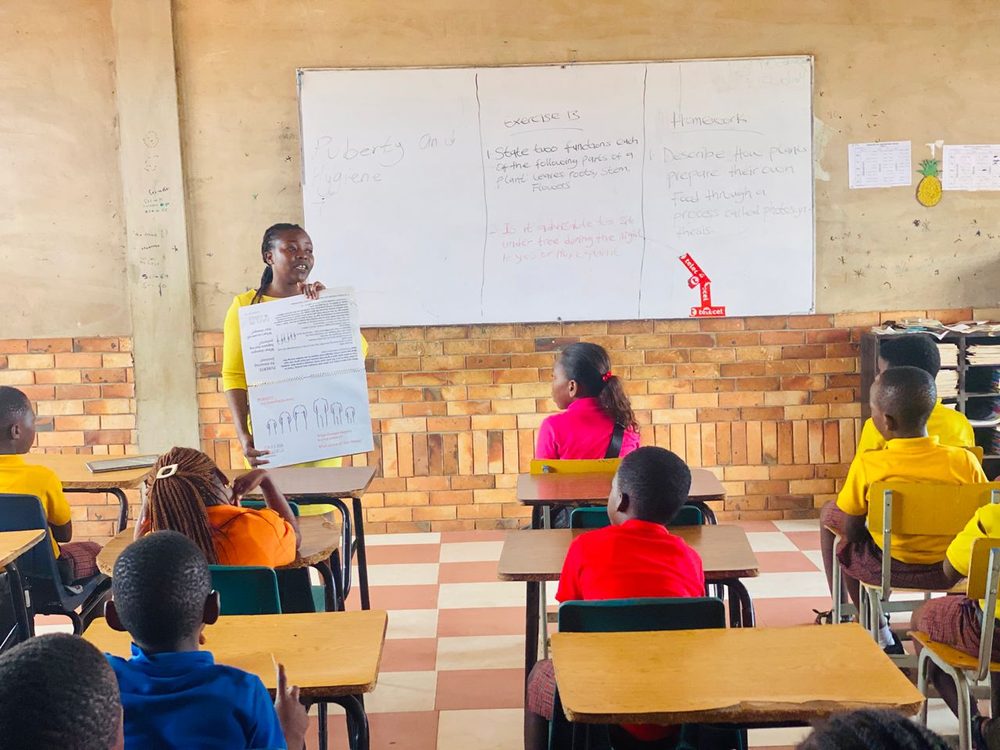
A local teacher leading a puberty and hygiene lesson in Senase
A local teacher leading a puberty and hygiene lesson.
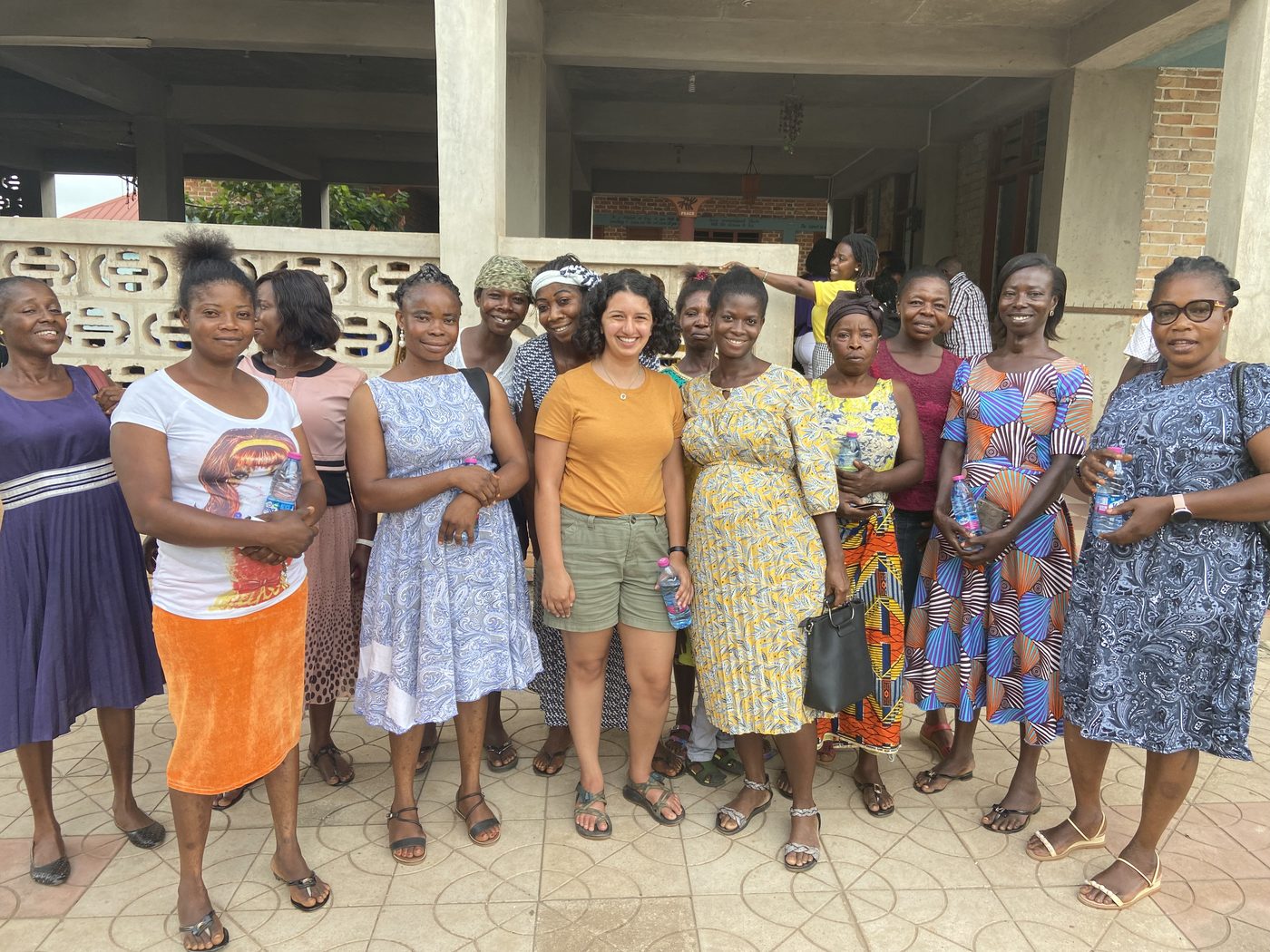
Parents and community members in Senase gathered with the Jova Foundation team after a parent conference
A parent conference at the school, where we discussed reusable pads and the health education classes.
Let's Look at the Data

The problem we're working to stop

"I am 11 years old. If I haven't started my period yet, and I'm having sex, will I become pregnant?"

A fourth-grade student asked us this during a health education class, and two other students asked similar questions. To understand how common this was, we ran an anonymous survey of 441 students at both schools.

1 in 5

students under 9th grade reported having had sex, some as early as the 4th grade.

Why it matters

Children this young can't consent, and early sexual activity leaves them exposed to abuse, pregnancy, and infection. Some girls are pressured into sex in exchange for basic needs like menstrual pads, as Abina's story below shows.

What we do about it

Our health education starts in 4th grade, gives girls their own menstrual supplies, and teaches students about their bodies, consent, and how to get help. We also trained teachers to prevent and identify child abuse, so the adults students see every day know the warning signs and how to respond.

In Their Words

Stories from Senase

*Names have been changed and no photos were taken in order to protect the girls' privacy. Interviews were conducted with permission from these students, their parents, their teachers, and their school administrators. This article has been reviewed by local community members for accuracy and tone.

Abina*

Abina is a thirteen-year-old girl living in Senase, Ghana. During the day, she goes to school; she's in grade seven. After school, she sometimes spends time with an older boy, who has a job and earns money. Her parents know of him as her boyfriend. They have sex. She takes birth control pills to protect herself against pregnancy, but the pills are expensive.

The boy gives Abina gifts: a pair of slippers, sometimes food, sometimes money. She uses this money to buy things to eat and menstrual pads. Pads are a luxury in Senase, and she might not have access to them if it weren't for the money she's given.

Abina says that sex was painful for her at first, though it's not anymore. She doesn't really enjoy it, and she doesn't particularly want to. She frequently comes up with excuses for why she can't have sex. She says that she would not keep seeing the boy if it weren't for the presents and the money that allows her to buy pads.

No one should ever have to engage in sexual behaviors for access to materials that should be a right for everyone. At the Jova Foundation, we support the community of Senase as they work to improve access to menstrual pads and build bodily autonomy for girls.

Jennifer*

Jennifer, a fourteen-year-old, lives in Senase, Ghana. About a year ago, she began to notice unusual vaginal discharge, accompanied by a strange smell. At first she thought it might be because she wasn't bathing enough, but even after bathing at least twice a day, her issue has persisted. When she asked her mother, her mother suggested it may have been caused by eating too many sugary foods.

Jennifer has been living with this condition for an entire year. Despite her active concerns, she hasn't yet been to see a doctor or gotten any medication to address it. She thinks that because she hasn't had sex, her discharge is not a medical issue but rather something she needs to deal with on her own.

Education about puberty and sex is limited in her school, so Jennifer doesn't have much information about vaginal health or what to do when she notices unusual symptoms. For now, she's just living with the discharge and the discomfort of not knowing what is happening in her body.

Girls and women, like Jennifer, should not have to face health issues due to insufficient knowledge about their own bodies. Untreated vaginal infections can have long-term consequences, and women can feel ashamed and isolated due to their symptoms.
Health education today

Health education classes are ongoing in Senase without outside funding. Local teachers lead them, using evidence-based practices alongside the community's traditional medicine, so students have accurate information about puberty, menstruation, and their own health.

Help us start what's next.

Senase now runs on its own, led by local teachers. Your gift helps us bring what we learned here to our next project, built on the same principles. Thank you for your past, present, and future support.